

Social impact is usually described through what changes at the end of a project.
A public space becomes usable again. An educational initiative reaches more people. An animal rescue improves everyday care. A local community solves a practical problem. A volunteer project delivers a concrete result.
These outcomes matter. Without them, participation can easily become activity for activity's sake.
But focusing only on the final result can make another kind of change almost invisible: what happens to people while they are participating.
Someone who has never volunteered completes a small task. A resident who usually stays outside local initiatives contributes an idea. A person with a useful skill realizes that their expertise can help a community. Participants who did not know each other begin exchanging information and solving problems together. Someone who initially joined for one activity later takes responsibility for another.
The project is still moving toward its main goal. At the same time, it is creating something else: people who are more connected, more capable of acting together, and more likely to participate again.
That can be a form of social impact too.
The problem: we often measure the result and overlook what participation creates
Projects need outcomes.
A community initiative cannot simply organize meetings forever and call that success. A volunteer program should produce useful work. A social project needs to understand whether its activities are actually improving something.
The problem appears when the final outcome becomes the only place we look for impact.
Imagine two projects that achieve a similar practical result.
In the first, a small core team organizes everything. Most people encounter the initiative only when they are asked to support or attend something. Once the project ends, the group disperses.
In the second, people participate throughout the process. Someone helps identify the problem. Others contribute skills. Volunteers take on specific tasks. Participants exchange knowledge, suggest improvements, and see how their actions affect progress.
The visible result may be similar.
What remains afterward is not.
The second project has also created relationships, experience, confidence, knowledge, and a stronger habit of collective action.
Those outcomes are harder to count, but they can shape what the community is able to do next.
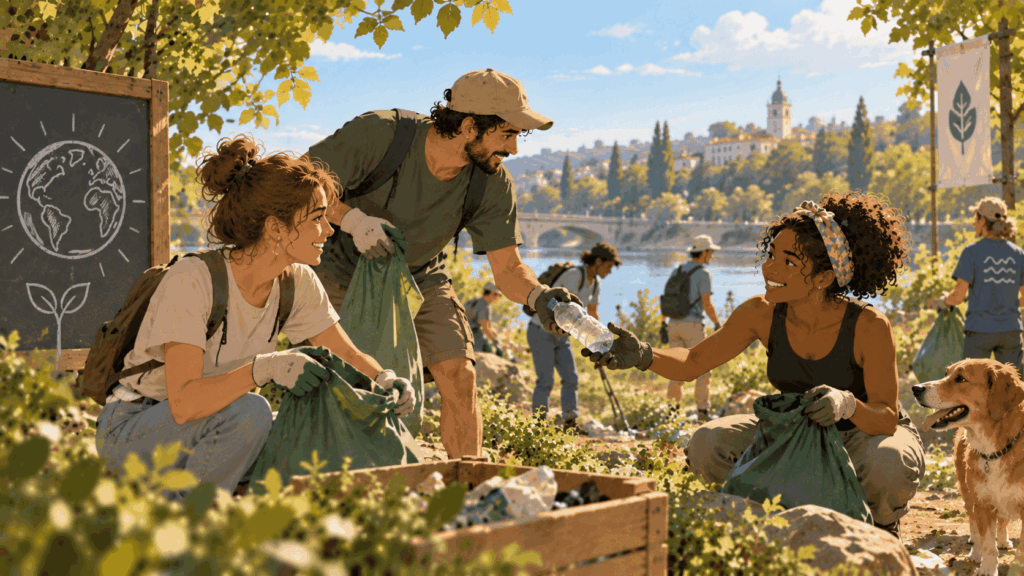
Participation teaches people that problems can be acted on
Many social problems feel distant even when they exist nearby.
People notice something that should change, but the path between noticing and acting is unclear. Who should start? What can one person realistically do? Is there already a project working on it? Would a small contribution even matter?
Participation answers some of these questions through experience.
A person joins a community initiative and discovers that they do not need to solve the entire problem. They can complete one part of it.
Someone else handles another.
The project moves because different contributions connect.
That experience matters because it changes the mental model of social action. A problem stops looking like something that can be addressed only by institutions, large organizations, or exceptionally committed activists.
People begin to understand collective action as something they can enter.
Once that happens, participation has already produced a change in the community's capacity to respond.
The first contribution can change how someone sees their own role
There is a significant difference between caring about an issue and seeing yourself as someone who can influence it.
Many people remain on the first side of that divide.
They care about their neighborhood, animals, education, accessibility, the environment, or people experiencing hardship. But they do not necessarily describe themselves as volunteers, activists, organizers, or community members.
A small contribution can challenge that assumption.
Someone spends twenty minutes helping organize information. Another person joins a local activity for an hour. A participant uses a professional skill to solve one specific problem through online volunteering. Someone completes a micro-volunteering task that requires only a few minutes.
The action may be small, but it creates evidence: I can be useful here.
That realization can matter more than an abstract invitation to "get involved."
Participation gives people a concrete experience of their own agency.
Communities become stronger when knowledge stops staying with a few people
Projects also create impact by spreading practical knowledge.
At the beginning of an initiative, one or two people may understand everything. They know whom to contact, how the process works, what has already been tried, which resources exist, and what still needs to happen.
That concentration of knowledge makes the project fragile.
As more people participate, information begins to move.
A volunteer learns how to coordinate a task. Someone else understands how project updates are prepared. A participant learns how to welcome newcomers. A community member discovers which local organizations can help with a particular issue.
Eventually, people can begin helping one another without routing every question through the original organizer.
This is a subtle but important form of community engagement.
The community is not simply getting more people to complete tasks. It is distributing the ability to act.
Participation creates relationships that can outlive the project
Not every valuable result belongs directly to the project that produced it.
Two people may meet while volunteering and later collaborate on something else. A local organization may discover a specialist it can contact in the future. A participant may introduce another community member to a useful group. Someone who joined one initiative may later recognize a similar need elsewhere.
None of these outcomes may appear in the original project plan.
Yet they increase the number of connections through which future cooperation can happen.
This matters because communities do not start from zero every time a new problem appears.
They rely on existing relationships.
Who already knows whom? Who has worked together before? Who knows which person has a particular skill? Who feels comfortable asking for help?
Participation builds some of that social infrastructure.
A completed project can therefore leave behind more than its direct result. It can leave behind a community that knows how to find and work with itself.
Small participation can be meaningful participation
If participation creates value, it becomes important not to define it too narrowly.
Traditional volunteering often rewards visibility and duration. The people who attend every event or take on large responsibilities naturally become the most noticeable participants.
But useful involvement can happen at many scales.
Someone may have five minutes to verify information. Another person may spend half an hour translating an update. Someone can provide feedback based on professional experience. A local resident may answer a question that would otherwise take organizers hours to research.
These are ways to help without money that fit different levels of time, confidence, and availability.
This is one reason micro-volunteering matters.
It allows participation to begin before someone is ready for a larger role.
For some people, the small task will remain a one-time contribution. For others, it becomes the first experience that makes further participation feel possible.
Both outcomes have value.
Online volunteering expands who gets to participate
Physical presence has traditionally defined many forms of community action.
Digital participation changes that boundary.
Someone can contribute to a project without living in the same neighborhood or even the same country. They can research information, translate materials, mentor participants, organize data, review documents, create educational resources, or offer expertise remotely.
Online volunteering does more than increase the number of potential volunteers.
It can change who is included in the community's problem-solving process.
People with limited mobility, irregular schedules, caregiving responsibilities, or geographic distance may be able to participate in ways that traditional volunteer structures make difficult.
When participation becomes more flexible, communities gain access to knowledge and perspectives that might otherwise remain outside the project.
Accessibility therefore affects more than convenience.
It affects whose experience can shape social impact.
Participation can turn passive audiences into sources of knowledge
Organizations often communicate outward.
They explain a problem, describe a project, publish updates, and invite people to support what is already happening.
Participation introduces another direction.
Information begins moving back toward the project.
Community members point out needs organizers have missed. Volunteers notice inefficient processes. Participants suggest different ways to structure activities. Local residents contribute contextual knowledge that an outside team could not easily acquire.
The audience becomes a source of intelligence.
This can improve the project itself.
A team may begin with one assumption and discover through participation that the actual barrier is somewhere else. An activity may evolve because participants reveal that the original format excludes certain people. A volunteer process may become simpler because newcomers repeatedly identify the same confusing step.
Participation is valuable here not because every suggestion must be accepted.
It is valuable because projects gain access to information that cannot be generated entirely from inside the organization.
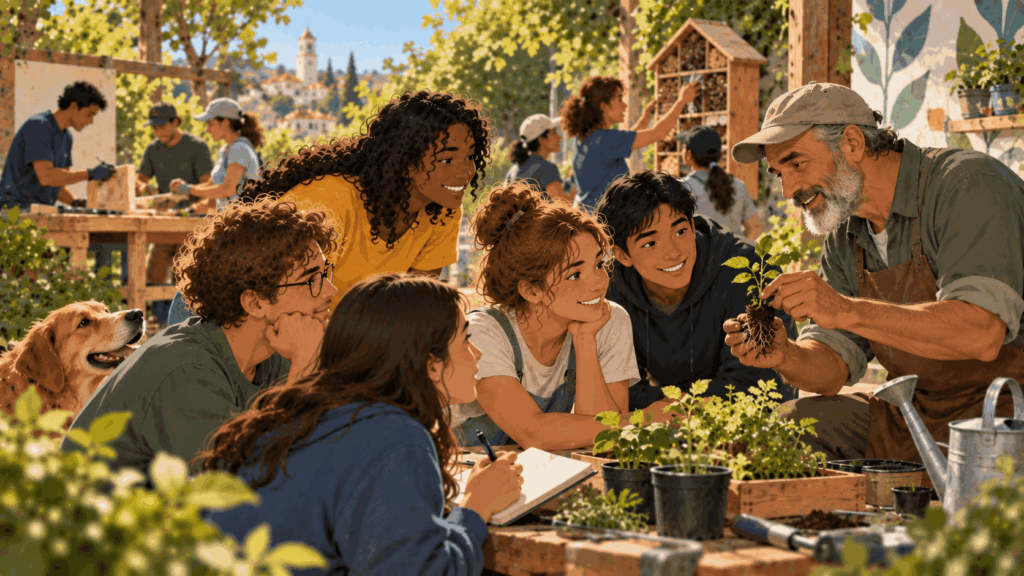
People learn shared responsibility by practicing it
Communities often say they want more people to take responsibility.
But responsibility is difficult to create through messaging alone.
People learn it through opportunities to practice.
A participant receives a clearly defined task and completes it. Later, they take another without waiting to be personally invited. Someone notices a gap and offers to handle it. A more experienced volunteer answers a newcomer's question. People begin coordinating small parts of the work among themselves.
Gradually, responsibility becomes less centralized.
This does not mean everyone should become an organizer. Healthy communities still need boundaries, coordination, and different levels of involvement.
It means more people understand that the project is not something happening in front of them.
They can influence what happens inside it.
That shift from audience to participant is itself meaningful social change.
Visible progress strengthens the connection between action and outcome
Participation becomes more powerful when people can see where their effort went.
Without feedback, volunteering can feel fragmented. Someone completes a task, sends it to an organizer, and never knows whether it was useful.
Visible progress closes that gap.
A project update can show that information has been prepared, an activity has moved to the next stage, a problem has been solved, or a community suggestion has changed the plan.
This helps people connect a small personal action with a larger collective outcome.
For crowdfunding for good, online volunteering, local participation, or micro-volunteering, the principle is similar: people understand their role better when they can follow what happens after they act.
That understanding makes participation feel less symbolic and more concrete.
Digital tools can support participation as a process
If organizations want participation to create lasting value, they need more than a way to recruit people.
They need infrastructure that helps people understand the project, discover where they can contribute, stay informed, and see progress.
This is where digital tools for nonprofits can play an important role.
Good nonprofit technology can make different forms of participation visible within the same project. It can help organizers communicate current needs, create smaller tasks, involve people remotely, share updates, and keep the community connected as the initiative develops.
Technology cannot create meaningful participation on its own.
But it can reduce the friction that often prevents participation from continuing.
Instead of scattered requests across different channels, people can have a clearer picture of what the project is doing and where they fit.
How Deya can make participation part of the impact
Deya brings projects, volunteer opportunities, community interaction, and visible progress into one environment.
That structure allows participation to become part of how a project develops rather than something added only when extra help is needed.
A person might begin with one micro-volunteering task. Another may contribute through online volunteering. Someone else may join a local activity, offer expertise, share useful information, or become involved in the community around the project.
As progress becomes visible, participants can see how these different actions connect.
For organizers, this creates more than additional capacity. It can create a community that gradually understands the project, develops useful knowledge, and becomes better able to participate in what happens next.
Deya does not make participation meaningful simply by putting people in the same digital space.
The meaning comes from what people are able to do there and what their actions help move forward.
Sometimes the process changes the community before the project is finished
A project does not have to reach its final milestone before social impact begins.
Impact may already be happening when a person who has never volunteered decides to contribute five minutes.
When someone realizes their professional skill can help solve a community problem.
When residents who barely knew each other begin coordinating.
When knowledge moves from one organizer to several participants.
When a newcomer becomes the person who helps the next newcomer.
When people stop waiting for someone else to act and begin recognizing what they can do themselves.
The final result still matters. Participation should lead somewhere.
But the path toward that result can leave the community more connected, experienced, confident, and capable than it was before.
That is why participation should not always be treated only as a means of producing social impact.
Sometimes participation is part of the impact itself.
Deya helps connect online volunteering, micro-volunteering, project progress, and community engagement so that people can contribute in different ways and see how their actions become part of something larger.
Want your participation to create a visible result? Explore Deya and find a way to take part.